Historical Context | 𐐐𐐮𐑅𐐻𐐱𐑉𐐨𐐿𐐲𐑊 𐐗𐐱𐑌𐐻𐐯𐐿𐑅𐐻
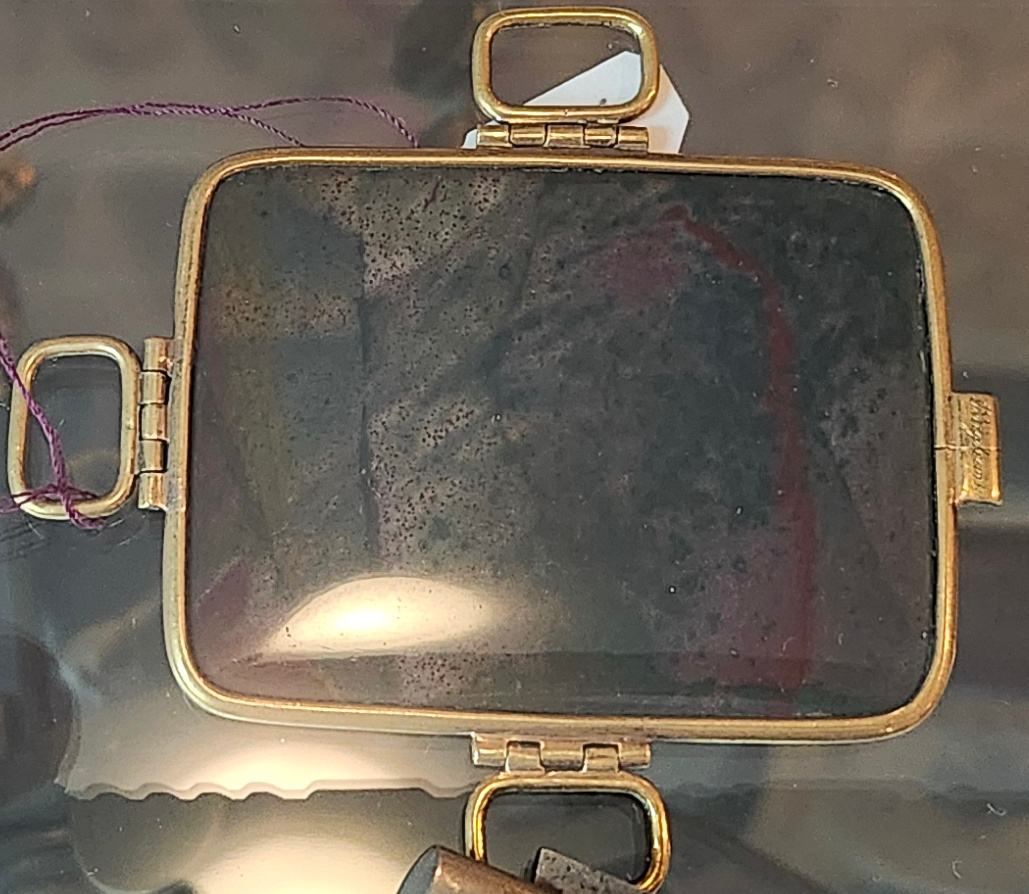
The Pioneer Memorial Museum of the Daughters of Utah Pioneers in Salt Lake City preserves a “bloodstone” identified as item no. 1076. Its accompanying information states that the stone was said to have been given to Thomas Brown by Captain Cook in the 1700s, descended through the Brown family to 1851 pioneer Mary Ann Wood Brown, and was then given by her to Brigham Young. Young reportedly carried it “when going into unknown or dangerous places.” The recorded donor is Marian J. Folsom.
This artifact is very likely the blood stone discussed in Watt’s letter. Mary Ann Wood Watt Brown was George D. Watt’s mother, the museum record places a Brown-family bloodstone in Brigham Young’s possession, and Watt’s dated letter independently refers to such a stone while treating Young as its owner. The convergence of family provenance, object type, recipient, and ownership makes the identification highly probable.
The letter is significant because it records the stone not simply as a family keepsake, but as an object whose traditional efficacy might be tested. At the same time, Watt’s caution about entrusting it to a stranger shows that the amulet was regarded as valuable property as well as an object of inherited belief.