We provide transcriptions of the Deseret Alphabet entries preserved in the Historical Department Office Journal (HDOJ), a major manuscript source for the everyday use of the alphabet in nineteenth-century Utah.
The Historical Department Office Journal records the work of the Historianโs Office from 1844 through early 1972 and of the Historical Department thereafter. In addition to documenting the daily activities of clerks, Church leaders, and visitors, the journal frequently records events taking place in Salt Lake City and developments affecting the Church more generally.
Among its thousands of entries are over eighty passages written in the Deseret Alphabet between 1859 and 1869. These records are especially valuable because they preserve the alphabet in everyday manuscript use rather than in printed primers or books. The Deseret Alphabet is used in discussions of frontier politics, missionary activity, military occupation, local rumor, and ordinary administrative business.
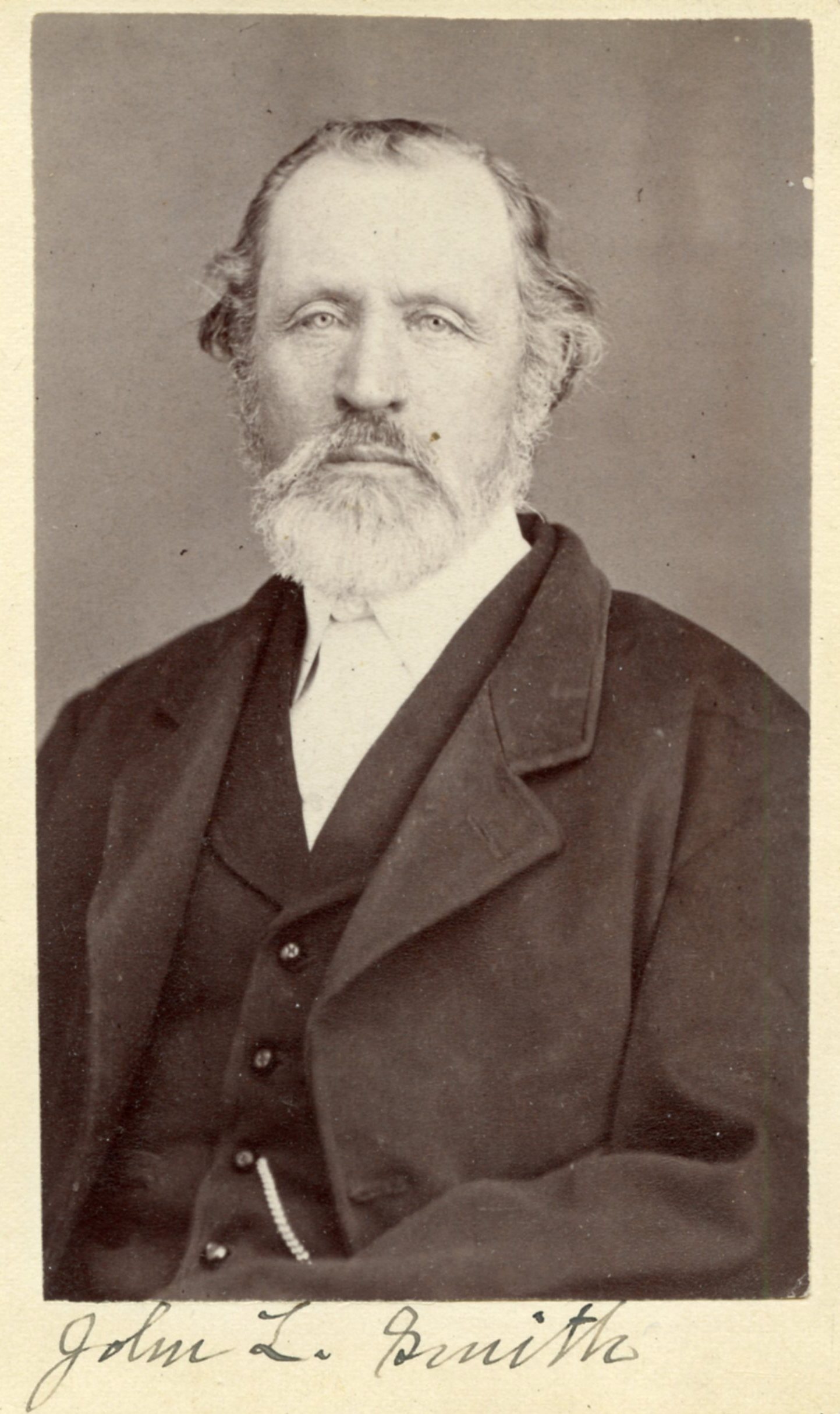
The Historical Department Office Journal served as the daybook of Church administration in territorial Utah, recording meetings, correspondence, visitors, political developments, missionary activity, local news, and countless details of daily life. Between 1859 and 1869, portions of the journal were occasionally entered in the Deseret Alphabet by several clerks, most notably John Lyman Smith, but also Marion J. Shelton and probably Robert L. Campbell. Written in a formal manuscript hand rather than in print, these entries provide some of the richest surviving evidence for how the alphabet functioned in practice.
Unlike the Deseret Alphabet primers and other published works, the journal was not intended to teach the script or promote orthographic reform. Its Deseret passages were written in the course of ordinary record keeping and discuss subjects ranging from missionary work, canal construction, and relations with Native peoples to federal intervention in Utah, Camp Floyd, criminal trials, economic concerns, frontier folklore, and even reports of giant skeletons and treasure-digging. Some entries move fluidly between Roman and Deseret letters within a single sentence, offering a rare glimpse of bilingual script practices in nineteenth-century Utah.
Printed books reveal what advocates hoped the Deseret Alphabet might become; the Historical Department Office Journal reveals how it was actually used. Preserving evidence of mixed-script writing, manuscript letter forms, and regional pronunciation, as well as territorial politics, religious administration, and everyday life, these entries rank among the most important surviving sources for the practical history of the Deseret Alphabet.
HDOJ 23:15โ80, 5โ30 June 1859. John Lyman Smith holograph.
The June entries contain intermittent Deseret Alphabet writing, often brief weather notes, but several longer passages discuss events of wider importance. Topics include the British Mission, the digging of the Jordan and Salt Lake Canal, cricket infestations, an encounter with Alfred Cumming, President Buchananโs blunders, federal threats against the Saints, military occupation, and postal difficulties.
HDOJ 23:93โ154, 4 Julyโ8 August 1859. Marion J. Shelton holograph.
Marion J. Sheltonโs entries are especially interesting because they sometimes move between Roman and Deseret letters within the same sentence. The entries discuss Independence Day celebrations, federal abuses, discontent in Parowan, Hopi policy, buffalo on Antelope Island, Camp Floyd prisoners, tensions with a Camp Floyd sutler, possible coal discoveries, criminal trials, Shoshoni relations, witness intimidation, and economic concerns.
HDOJ 23:214โ227, 8โ14 September 1859. John Lyman Smith holograph.
The September entries preserve some of the most striking material in the journal. They discuss missions to the ๐ฃ๐ฌ๐ฟ๐ถ๐ฎ๐ฝ ๐๐๐ผ๐ฎ๐ฐ๐๐ (โMoquitch Indians,โ or Hopi people), responses to the Cedar Fort raid, prayer circles, reports of human skeletons ten feet high, treasure digging in western New York, lawsuits, the fate of the Kirtland Temple as a sheep stable, canal machinery, and territorial politics.
HDOJ 30:173โ272, 21 Aprilโ12 August 1869. Likely Robert L. Campbell holograph.
A decade later, the Deseret Alphabet appears only occasionally in the journal. These entries are probably by Robert L. Campbell, who also wrote the Roman longhand entries. Unlike the more narrative entries of 1859, the 1869 material is often brief and administrative, recording office business and staff activity.
The Deseret portions usually repeat material already written on the same page in English cursive. Even so, they are linguistically valuable because Campbellโs spellings may reflect his Scottish pronunciation. His Deseret glyphs are also notably blocky, especially beside his elegant English Copperplate cursive.
Historical Department Office Journal, 1844โ2023
Church History Library, CR 100 1.
Relevant entries include HDOJ 23:15โ80; HDOJ 23:93โ154; HDOJ 23:214โ227; and HDOJ 30:173โ272. Original transcriptions to English by LaJean Purcell Carruth, 2004, revised 2011, and 2014, Church History Library, CR 100 912.